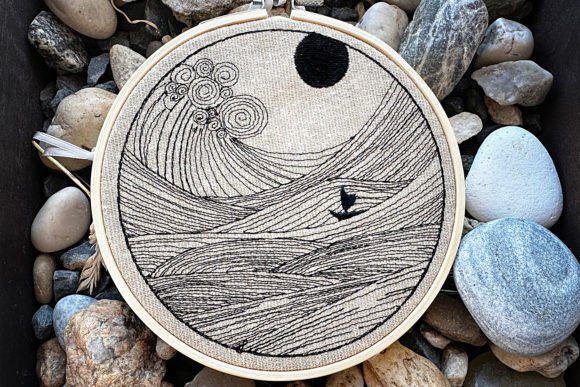
Japanese Boat on Sea Machine Embroidery Design
If you are preparing your booth for the upcoming weekend craft fair or refreshing your Etsy seller inventory, you know that visual impact is everything. As an experienced embroidery designer who has stitched thousands of designs and watched trends come and go, I look at a file before I ever load it into the hoop. I am asking myself: Does this sell? Does it photograph well? Is it practical to produce in bulk?
Today, I am reviewing the Japanese Boat on Sea Machine Embroidery Design. Based on the description—featuring gorgeous Japanese art with a boat in a storm and raging waves—this piece immediately grabs my attention. It promises drama, movement, and a premium aesthetic. But will it work as a viable craft fair product? Let’s break down exactly how this embroidery design performs in the real world of handmade markets.
First Impressions: Bold Drama Meets Handmade Quality
The moment you see the preview of the Japanese Boat on Sea Machine Embroidery Design, it does not feel soft or minimal. It feels bold. The concept of a "boat in a storm" suggests high contrast and dynamic lines. In the world of machine embroidery, this translates to a design that demands attention. It is not a subtle accent; it is a statement piece.
For a small shop product owner, this is excellent news. At a busy craft fair, customers walk past dozens of booths. A design featuring "raging waves" creates immediate visual tension. It stops the scroll on Instagram and it stops the eye on a table covered in textiles. The artistic style leans towards elegant and decorative rather than cute or rustic. This positions your finished items as higher-value goods, allowing you to price them above standard mass-produced merchandise.
However, because the theme involves water and storms, we must consider the color palette. Will the threads used capture the depth of the ocean? If executed well, this embroidery file can look incredibly sophisticated. If the thread choices are flat, the dramatic effect is lost. This is why testing is non-negotiable.
Product Versatility: Where This Design Shines
One of the biggest questions designers face is versatility. Can one digital asset serve multiple purposes? With the Japanese Boat on Sea Machine Embroidery Design, the answer is a resounding yes. Here is how it translates across different handmade products:
- Tote Bag Design Potential: A large tote bag provides the perfect canvas for a wave-heavy design. Placing the boat centrally allows the waves to flow around the edges, utilizing the full width of the bag. This is a staple item for market shoppers, and a unique embroidered motif elevates it from basic cotton to a boutique accessory.
- Apron Embroidery: For the home cook or the artisan selling kitchenware, placing this on the bib of an apron works beautifully. The vertical nature of many boat motifs fits the torso area well. Just ensure the design scales correctly so the details do not get lost in the stitching.
- Tea Towel Embroidery: Linen or cotton tea towels are popular gift items. The maritime theme fits perfectly with coastal or farmhouse decor trends. The texture of the towel interacts nicely with the stitches, adding a tactile element that buyers love.
- Embroidered Patch: If the design allows for a clean border, turning this into a patch opens up a new revenue stream. Patches can be ironed or sewn onto denim jackets, backpacks, and caps, extending the life of the design beyond just home goods.
- Pillow Covers and Market Bags: For larger displays, pillow covers allow the "storm" aspect to really breathe. The swirling waves can create a mesmerizing focal point on a sofa or bed. Similarly, structured market bags benefit from the durability and visual weight of this design.
Production Practicality and Selling Points
As a business owner, I need efficiency. Does this design lend itself to batch production? Generally, complex scenic designs like this require more time than simple monograms. However, if the stitch density is optimized, it can still be produced efficiently.
When photographing these items for your online listings or social media, the Japanese Boat on Sea Machine Embroidery Design offers great opportunities. The contrast between the fabric and the thread, especially if you use metallic or variegated threads for the waves, will pop in photos. High-quality images are crucial for an Etsy seller or anyone relying on digital marketing. You can create printable mockups using this design to showcase potential uses before you even cut the first yard of fabric.
The narrative also sells. People buy stories. A boat battling the waves evokes feelings of resilience, adventure, and the power of nature. You can use this in your product descriptions to connect emotionally with buyers. It transforms a simple finished product into a piece of art with meaning.
Critical Designer Notes: Avoiding Production Pitfalls
While the concept is strong, execution is where many makers fail. Before you commit to producing hundreds of units, you must address several technical challenges inherent to this specific design theme.
- Stitch Density and Clarity: Waves are often represented by long, sweeping satin stitches or dense fill patterns. If the stitch density is too high, the fabric may pucker, especially on lighter materials like thin cotton or linen. Conversely, if the details of the boat are too small, they may become a muddy blob when stitched. Always check the hoop size requirements and ensure the design resolution matches your machine’s capabilities.
- Fabric Texture Interference: When embroidering on textured fabrics like heavy canvas for tote bags or waffle-weave for tea towels, fine details can disappear. The bumps in the fabric prevent the needle from piercing cleanly, leading to skipped stitches. Test on scrap pieces of your actual target fabric to see if the wave definition holds up.
- Thread Contrast and Color: The success of a "storm" design relies heavily on color theory. Dark blue waves on black fabric will vanish. Light blue waves on white fabric might lack depth. You need strong contrast. Consider using variegated threads that shift from deep navy to seafoam green to simulate the churning water. This adds dimension without requiring excessive digitizing complexity.
- Stabilizer Selection: To prevent distortion during the stitching of large wave areas, you need robust support. A cut-away stabilizer is usually best for garments and bags that need to remain flexible but stable. For home decor items like pillows, a tear-away might suffice if the fabric is woven tightly. Never skip the stabilizer step; it is the difference between a professional finish and a warped disaster.
- Commercial Licensing: Before you list these items on Etsy or sell them at a fair, verify the license terms. Some digital embroidery files are for personal use only. Ensure you have the rights to sell the physical products made from this design. Protecting your business means avoiding copyright strikes later on.
Final Verdict for Craft Fair Sellers
The Japanese Boat on Sea Machine Embroidery Design is a powerful addition to any maker’s library. It is not a generic clip-art design; it carries artistic weight and emotional resonance. For the right maker—one who pays attention to fabric choice, thread selection, and stabilizer support—this design can become a top-selling item.
It works exceptionally well for commercial embroidery projects that aim for a premium look. Whether you are creating limited edition tote bags for a summer market or year-round home decor items, this design offers the visual punch needed to stand out in a crowded marketplace. Just remember: test first, contrast second, and always prioritize the quality of the final stitch over speed. If you nail the execution, you will have a product that customers don’t just buy, but keep and cherish.
Take the time to review the file carefully, inspect the design assets for any awkward jumps or trims, and trust your instincts. If the design makes you excited to pick up the needle, chances are your customers will be excited to take it home.